
Introduction
As a dental professional, one of the most common issues I see is improper brushing technique. Many people brush their teeth every day, yet still struggle with cavities, gum irritation, or plaque buildup. The reason is simple: brushing incorrectly can be almost as ineffective as not brushing at all.
To help you maintain a healthier smile, here are the most frequent brushing mistakes — and how to avoid them.
1. Brushing Too Hard
Many assume that brushing with force cleans better, but the opposite is true.
Why it’s a problem:
- Aggressive brushing wears down enamel, the protective outer layer of your teeth.
- It can irritate or damage your gums, leading to gum recession and sensitivity.
What to do instead:
Use gentle, circular motions with a soft-bristle toothbrush. Think of brushing as massaging your teeth, not scrubbing them.
2. Using the Wrong Toothbrush
Not all toothbrushes are created equal.
Why it’s a problem:
- Hard bristles can cause tiny abrasions on teeth and gums.
- A toothbrush that’s too large may not reach all areas of the mouth.
- Worn-out bristles lose their ability to clean effectively.
What to do instead:
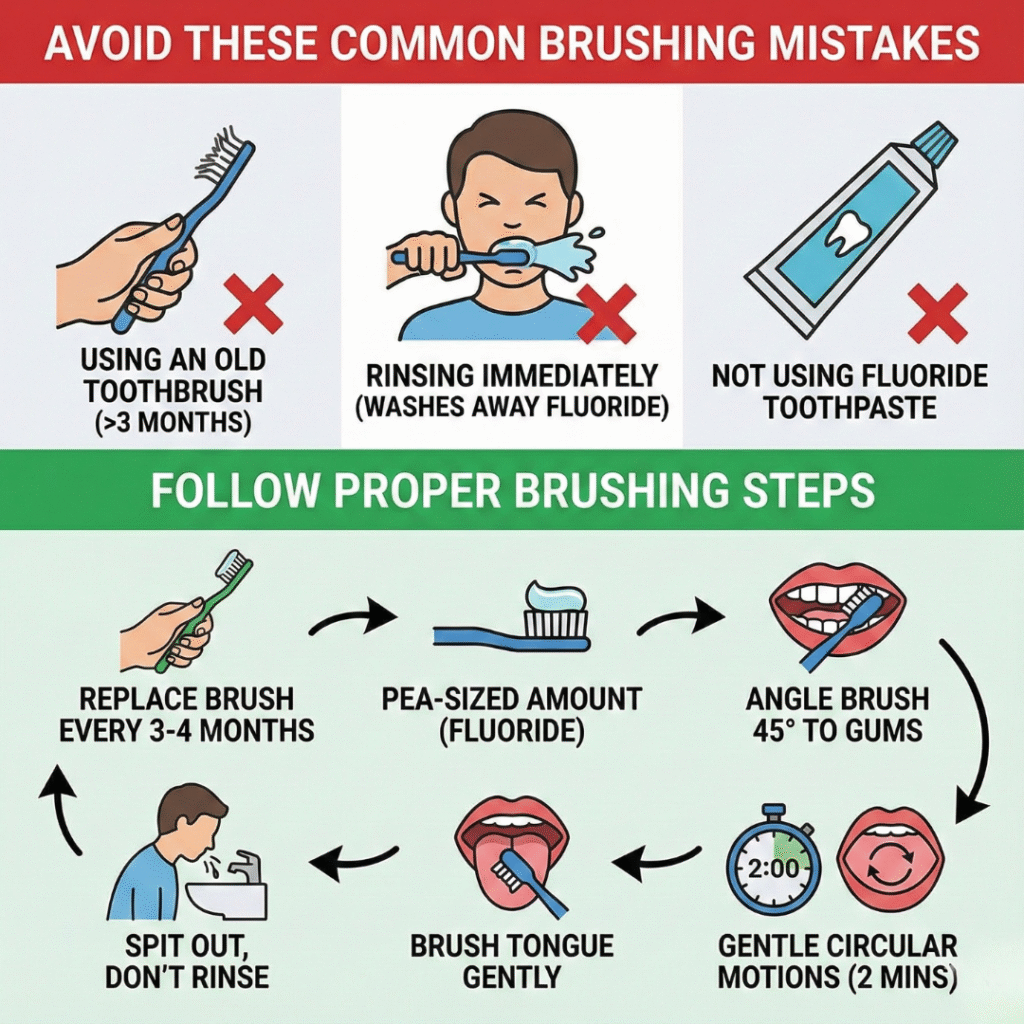
Choose a soft-bristle toothbrush with a small or medium head. Replace it every three months, or sooner if the bristles start to fray.
3. Brushing Too Quickly
A quick 20-second brush won’t remove plaque thoroughly.
Why it’s a problem:
- Plaque needs time and proper technique to be removed.
- Rushing means you miss important areas such as the back molars and gumline.
What to do instead:
Brush for two full minutes, twice a day. Divide your mouth into four sections and spend 30 seconds on each.
4. Ignoring the Gumline
Many people brush only the visible surfaces of their teeth.
Why it’s a problem:
- Plaque often collects where the tooth meets the gum.
- Missing this area increases the risk of gum disease and inflammation.
What to do instead:
Angle your toothbrush at 45 degrees toward the gumline and brush in small circular motions to clean this area effectively.
5. Not Cleaning the Inner Surfaces
The inside surfaces of your teeth are just as important as the outside.
Why it’s a problem:
- Plaque can accumulate unnoticed on inner surfaces, especially behind the lower front teeth.
- These areas are highly prone to tartar buildup.
What to do instead:
Rotate your brush vertically when cleaning behind the front teeth and use short up-and-down strokes.
6. Brushing Immediately After Eating
Why it’s a problem:
Although it may seem healthy, brushing right after meals can do more harm than good.
- Acidic foods temporarily soften enamel.
- Brushing during this time can wear away enamel faster.
What to do instead:
Wait 30 minutes after eating before brushing. Rinse with water if you need to freshen your mouth.
7. Forgetting to Clean the Tongue
The tongue is often the biggest contributor to bad breath.
Why it’s a problem:
- Bacteria and food particles collect on the tongue’s surface.
- This can cause odor and contribute to plaque formation.
What to do instead:
Gently brush your tongue from back to front or use a tongue scraper daily.
8. Skipping Flossing or Mouthwash
Brushing alone does not clean the entire mouth.
Why it’s a problem:
- Flossing removes plaque between teeth where a toothbrush cannot reach.
- Antimicrobial mouthwash helps reduce bacteria and freshens breath.
What to do instead:
Make flossing part of your daily routine and rinse with mouthwash after brushing to support gum and tooth health.
Final Thoughts
Brushing your teeth correctly is the foundation of good oral health. With proper technique and consistency, you can prevent cavities, maintain strong gums, and keep your smile healthy for years to come. If you’re unsure whether you’re brushing correctly, don’t hesitate to ask your dentist for guidance during your next visit.